
In 1976, a landmark court case changed mental health forever with the duty to warn ruling. The Tarasoff v. Regents of the University of California case made it clear. Mental health professionals must protect people who are threatened by a patient.

This important decision came from a tragic event. Tatiana Tarasoff was murdered by a former patient, Prosenjit Poddar. He had told his therapist he planned to kill her. This raised big questions about keeping patient secrets versus protecting others.
Key Takeaways
- The Tarasoff case established a legal duty for mental health professionals to warn possible victims.
- The ruling has had a lasting impact on mental health practice and patient confidentiality.
- Mental health professionals must now balance confidentiality with the duty to protect.
- The case continues to influence legal and ethical discussions in mental health.
- Understanding the Tarasoff ruling is key for both legal and mental health professionals.
The Case That Changed Mental Health Practice
The events in 1969 involving Prosenjit Poddar and Tatiana Tarasoff led to a court case. This case changed how mental health professionals handle warnings.
The Events of 1969
In 1969, a series of tragic events happened. These involved Prosenjit Poddar and Tatiana Tarasoff, leading to a significant legal case.
Prosenjit Poddar and Tatiana Tarasoff
Prosenjit Poddar, a graduate student at the University of California, Berkeley, became obsessed with Tatiana Tarasoff. She had rejected his advances. This obsession led to Tarasoff’s murder.
The Therapist’s Dilemma
Poddar’s therapist had to decide whether to break patient confidentiality. They had to warn Tarasoff of the danger. This decision was key in the landmark court case.
The Legal Journey Begins
The Tarasoff case started a complex legal journey. It began with initial court proceedings.
Initial Court Proceedings
The court first looked at whether therapists had to warn Tatiana Tarasoff or her family. They had to decide if Poddar’s threats were serious enough.
Appeal to California Supreme Court
The case was appealed to the California Supreme Court. They made a landmark ruling. It was about the duty to warn and protecting victims.
| Year | Event | Legal Implication |
| 1969 | Tragic events involving Poddar and Tarasoff | Established the need for a duty to warn |
| Initial Proceedings | Court examined therapist’s duty | Set precedent for mental health professionals |
| California Supreme Court | Landmark ruling on duty to warn | Changed mental health practice nationwide |
Tarasoff vs Regents University California: Case Analysis
The Tarasoff case changed how mental health professionals protect people. We’ll look at the two key decisions that set new rules for them.
The First Decision (Tarasoff I)
In Tarasoff I, the court said therapists must warn people in danger. This was a big change in their legal duties.
The Duty to Warn Concept
Therapists must tell people who might be harmed by a patient. This idea was new and important. It made it clear what therapists must do when a patient is a threat.
“The therapist’s duty to warn is not limited to a warning; it includes taking other steps to protect the possible victim.”
Initial Reactions from the Professional Community
When the duty to warn came out, mental health workers had mixed feelings. Some thought it was good for safety. Others worried it could hurt the patient-therapist relationship.
| Aspect | Positive Impact | Negative Impact |
| Public Safety | More protection for those at risk | More legal trouble for therapists |
| Therapeutic Relationship | Clearer roles for therapists | Trust might suffer |
The Second Decision (Tarasoff II)
Tarasoff II made the duty to warn even bigger. It said therapists must do more to keep people safe.
Expanding to the Duty to Protect
Now, therapists must not just warn but also protect people. This change showed that just warning might not be enough.
The court in Tarasoff II said therapists can stop harm if they try. They must weigh protecting others against keeping patient secrets.
Key Features of the Tarasoff Ruling
The Tarasoff case changed how mental health professionals work today. It set rules for managing threats and warning others about dangers.
The Foreseeability Standard
The foreseeability standard is key in the Tarasoff ruling. It tells professionals to check if a client might harm others.
Determining Credible Threats
To figure out if someone is a threat, professionals look at their actions, words, and past. They check if harm to others is likely.
Assessment Guidelines
Guidelines suggest looking at several things. These include the client’s mental state, past actions, and the detail of the threat.
Identifiable Victims Requirement
The Tarasoff ruling also talks about identifiable victims. This means warning is needed when a specific person or group is at risk.
Specific vs. General Threats
Professionals must tell the difference between specific and general threats. Specific threats are aimed at known people, while general threats are vague.
Duty Limitations
The duty to warn only applies when a specific victim is at risk. This helps balance protecting others with keeping client information private.
Reasonable Steps to Protect
The Tarasoff ruling says professionals must take steps to protect others. This could mean warning the victim or taking other actions.
Warning Options
There are different ways to warn someone. This could be telling the victim directly or calling the police. The choice depends on the situation and the professional’s judgment.
Alternative Protective Measures
Other ways to protect include putting the client in the hospital or increasing supervision. These steps help reduce the risk of harm.
| Key Feature | Description | Professional Action |
| Foreseeability Standard | Assessing credible threats | Evaluate client behavior and statements |
| Identifiable Victims | Specific individuals or groups at risk | Identify and warn possible victims |
| Reasonable Steps to Protect | Taking action to lessen risk | Warn victims, involve police, or hospitalize client |
Pros of the Tarasoff Decision
The Tarasoff decision has greatly influenced mental health practices. It has made public safety better and clarified what professionals must do. This case has changed how mental health workers handle threats.
Enhanced Public Safety
One key benefit is better public safety. The Tarasoff decision made mental health workers warn people who might be in danger. This makes them more active in stopping harm.
Lives Potentially Saved
The Tarasoff ruling has saved many lives. It made sure mental health workers act when they see a threat. This has helped lower violent incidents.
Prevention of Violent Acts
The Tarasoff decision also helps stop violent acts. It requires workers to warn people or take steps to protect them. This makes the world safer for those at risk.
Clarification of Professional Responsibilities
The Tarasoff decision has made it clear what mental health workers must do. It has helped shape how they work. This clarity is key for their practices.
Legal Framework for Decision-Making
The Tarasoff ruling gave a legal guide for mental health workers. It helps them make decisions in tough situations. This framework is essential for their work.
Standardization of Practice
The Tarasoff decision has set a standard for mental health workers. This standard has made their work more consistent. It has also improved how they care for people.

Cons and Criticisms of the Ruling
The Tarasoff decision has faced a lot of criticism. One major issue is how it can undermine therapeutic relationships. This affects both the therapist-patient bond and the whole field of mental health.
Undermining Therapeutic Relationships
The duty to warn can lead to patient trust issues. People might worry that their secrets are not safe.
Patient Trust Issues
Knowing that therapists might share their secrets can make patients less open. This is key for therapy to work well.
Disclosure Hesitancy
This hesitation can slow down therapy. Sharing openly is essential for good treatment.
Practical Implementation Challenges
Putting the Tarasoff duty to warn into action is hard. It faces prediction difficulties and resource constraints.
Prediction Difficulties
It’s tough for therapists to guess when someone might become violent. This makes it hard to know when to warn others.
Resource Constraints
Not having enough resources makes it hard for mental health workers. This can lead to not protecting people as well as they should.
Potential for Defensive Practice
The Tarasoff decision might make therapists more defensive. They might focus on avoiding lawsuits instead of helping their patients.
Over-reporting Concerns
This could lead to too many warnings. Therapists might warn too often, breaking confidentiality when it’s not needed.
Impact on Treatment Decisions
The duty to warn can also change how treatment is done. It might lead to more cautious or limited care.
State-by-State Implementation
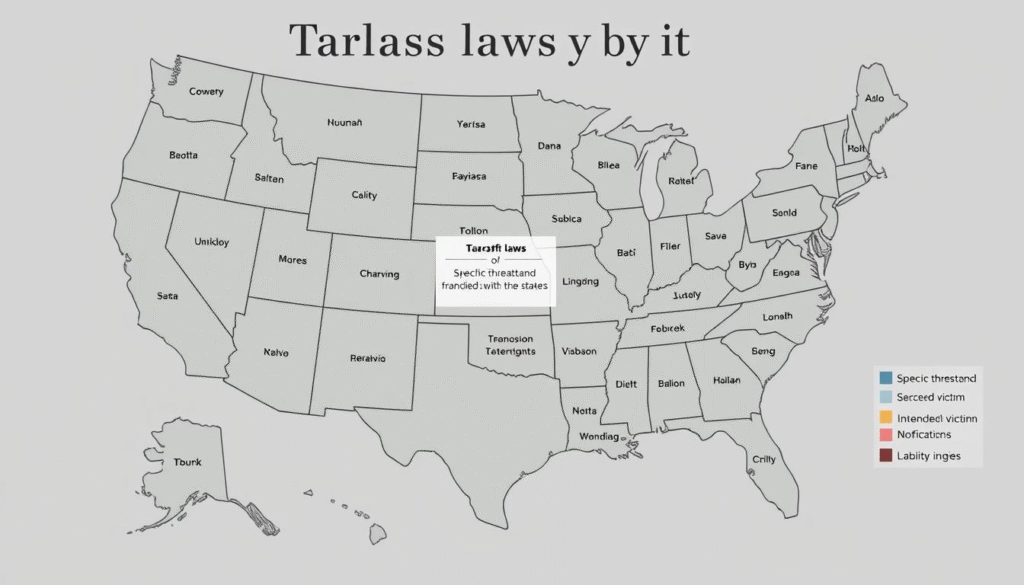
A state-by-state look at Tarasoff laws shows a complex mix of rules and duties for professionals.
States with Strong Tarasoff Laws
Some states have strong Tarasoff laws, closely following California’s lead. California and others have clear rules for mental health workers.
California and Similar Jurisdictions
California was the first to adopt Tarasoff laws, setting a standard for others. States that follow California ensure a consistent level of care.
Case Examples
Important cases in these states have helped clarify Tarasoff laws. For example, cases about threats to specific victims have shown how the duty to warn works.
States with Modified or Limited Duty
On the other hand, some states have weaker Tarasoff laws. These laws change the duty to warn in some ways.
Variations in Legal Standards
These differences show different legal views and cultural attitudes towards mental health. It’s key for professionals to know the laws in their area.
Practitioner Guidelines by Region
Guidelines for mental health workers by region stress the need to understand local laws. This helps professionals deal with the complexities of Tarasoff laws.
Recommendations for Mental Health Professionals
Mental health professionals need to use strong risk assessment protocols and consultation practices. This approach helps balance protecting others with keeping patient secrets.
Risk Assessment Protocols
They should use structured assessment tools to spot threats. These tools help them check the danger a patient might pose.
Structured Assessment Tools
Tools like the Structured Assessment of Violence Risk in Youth (SAVRY) and the Classification of Violence Risk (COVR) are useful. They offer a clear way to check for violence risk.
Documentation Requirements
It’s important to document risk assessments well. They should write down what they considered, what they found, and what they did next.
Consultation Practices
Talking to colleagues and supervisors is key to managing risk. Mental health workers should know when to seek supervision and follow legal consultation guidelines.
When to Seek Supervision
They should get supervision if a patient shows signs of danger. This helps them get advice on how to handle the situation.
Legal Consultation Guidelines
They should know when to talk to legal experts, mainly in tricky cases. This is when the duty to warn is not clear.
Balancing Confidentiality and Duty
It’s tough to balance protecting others with keeping patient secrets. Informed consent procedures and clear communication with patients about the limits of confidentiality are key.
Informed Consent Procedures
Patients should know about confidentiality limits at the start of treatment. Explain when secrets might be shared.
Communication with Patients About Limits
Being clear helps manage what patients expect and understand. It’s vital for trust and making sure patients know their part.
By following these tips, mental health professionals can meet the Tarasoff duty while staying ethical.
Modern Applications in the Digital Age
Today, mental health faces new challenges with social media and telehealth. These changes bring threats online and make telehealth tricky.
Social Media Threats
Social media lets people share violent plans easily. Mental health workers must think about online actions when checking if someone is a danger.
Monitoring Challenges
Keeping an eye on social media is hard. There’s so much online, finding real threats is tough.
Recent Case Precedents
Recent cases show how important online threats are. For example, Nathaniel v. Altadena made it clear that online actions matter in risk checks.
“The court’s decision highlights the need for mental health professionals to watch and act on online threats.”
Nathaniel v. Altadena
Telehealth Considerations
Telehealth raises questions about Tarasoff rules in remote settings. Mental health workers must figure out how to handle these issues.
Cross-Jurisdictional Issues
Telehealth crosses state lines, causing legal problems. Workers need to know the laws in each place.
| Jurisdiction | Tarasoff Duty | Telehealth Regulations |
| California | Strong Tarasoff duty | Requires licensure for out-of-state providers |
| New York | Modified Tarasoff duty | Allows out-of-state providers with temporary licensure |
Best Practices for Remote Providers
To tackle telehealth issues, mental health workers need good strategies. This includes safe online chats and clear emergency plans.

Conclusion
The case of Tarasoff v. Regents of UC has changed how mental health professionals work. It made it clear they must warn people who might be harmed.
This ruling has had a big impact on mental health care. It shows how important it is to protect people while keeping patient secrets. The court said, “the protective privilege ends where the public peril begins.”
“The protective privilege ends where the public peril begins.”
This case has big effects on mental health work. Now, professionals must do what they can to keep people safe. Here’s a quick look at what the Tarasoff ruling means:
| Feature | Description |
| Foreseeability Standard | The therapist must assess the foreseeability of harm to possible victims. |
| Identifiable Victims Requirement | The duty to warn starts when there’s a clear victim. |
| Reasonable Steps to Protect | Mental health professionals must take steps to protect possible victims. |
In short, Tarasoff v. Regents of UC has shaped the duty to warn for mental health workers. As mental health changes, it’s key for professionals to know their duties and legal roles.
Sources
The following sources were used to provide a deep understanding of the Tarasoff v. Regents of UC case. They also cover its big impact on mental health.
- Tarasoff v. Regents of the University of California: A Review
- Tarasoff v. Regents of University of California (1976)
- Ethics in the Tarasoff Era
- Tarasoff and Beyond: Duty to Warn and Protect
These sources give a detailed look at the case and its legal journey. They also show how it changed mental health practices. For more reading and research, these references are a great start.
FAQ
What is the Tarasoff v. Regents of UC case about?
The Tarasoff case is a key court decision. It shows that mental health professionals must protect people who might be harmed by a patient.
What were the circumstances surrounding the Tarasoff case?
Tatiana Tarasoff was murdered by Prosenjit Poddar. He was a former patient who told his therapist he planned to kill her.
What is the duty to warn, and how does it relate to patient confidentiality?
Mental health professionals have a duty to warn about threats. This duty is about protecting others while keeping patient secrets. It’s a tough balance.
How has the Tarasoff decision impacted mental health practice?
The Tarasoff decision has changed how mental health professionals work. They now focus more on risk and protecting others.
What are the key features of the Tarasoff ruling?
The ruling has three main points. It talks about foreseeability, identifiable victims, and the need for professionals to protect others.
How do Tarasoff laws vary by state?
Tarasoff laws change from state to state. Some states have strong laws, while others have weaker ones.
What are the challenges of implementing the Tarasoff duty in the digital age?
The digital world brings new challenges. Mental health professionals must now watch for threats online and manage risks in new ways.
How can mental health professionals balance confidentiality with the duty to protect?
Professionals can balance these by using risk assessments and talking to colleagues. They also need to get consent from patients.
What are the benefits of the Tarasoff decision?
The decision helps save lives and prevent violence. It also makes it clear what mental health professionals must do.
What are the criticisms of the Tarasoff decision?
Some say the decision can hurt therapy relationships. It also makes it hard to follow the rules and can lead to defensive practices.